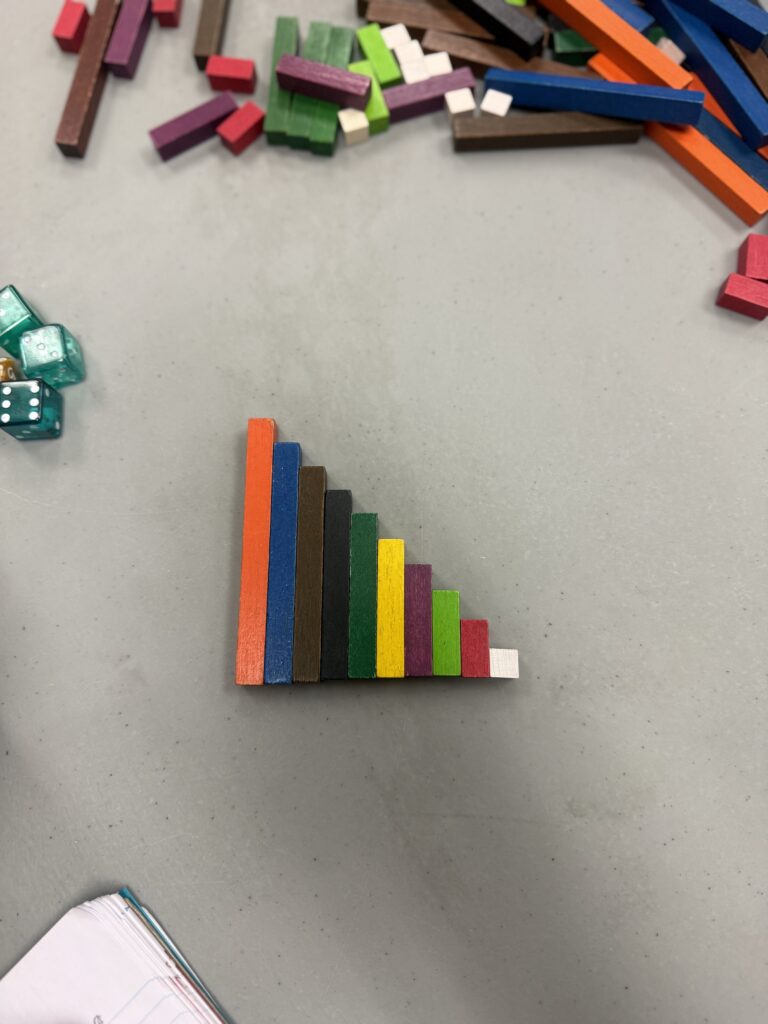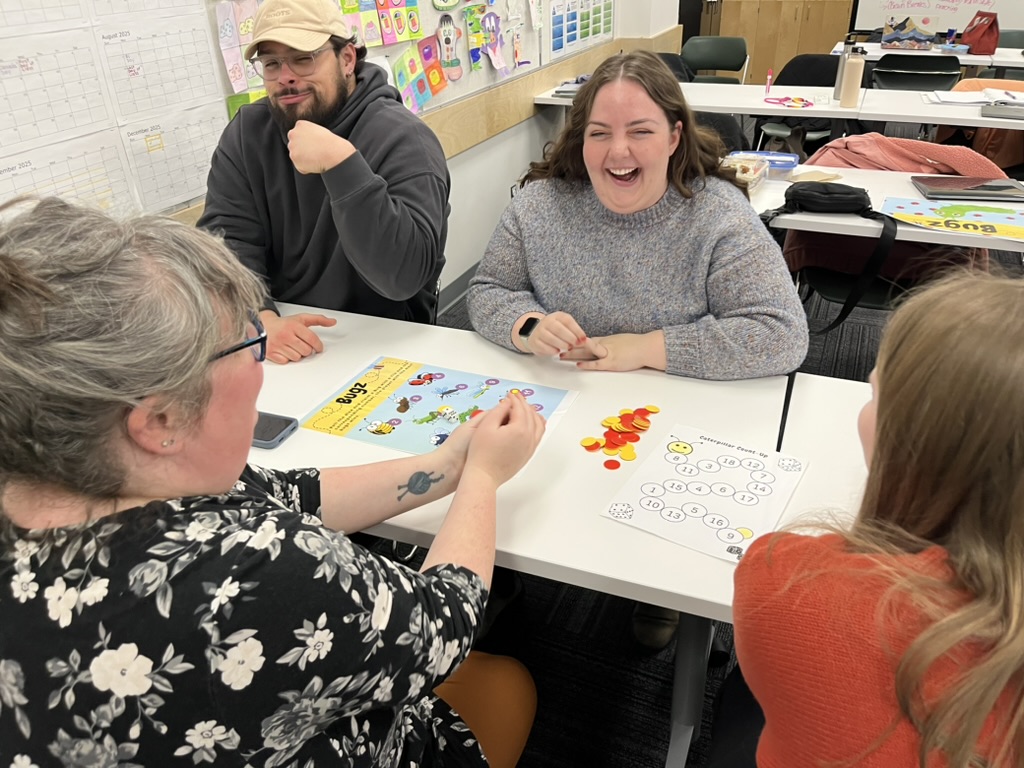
Throughout reading Learning and Teaching Early Math, I’ve learned a ton that’s shifted how I think about teaching math, especially in the early years. One thing that really stuck with me is that kids’ math development happens in a predictable way, kind of like learning to walk or talk. That really clicked for me. It made me realize how important it is to meet students where they’re at, rather than forcing everyone to move at the same pace. I know from experience that struggling with math in school can feel discouraging, so creating a safe, supportive space is something I really want to prioritize. I also loved learning about learning trajectories and how they help us figure out the steps students need to take next. I don’t want to teach math like it’s just about right or wrong answers, I want to help students build real understanding, using strategies that make sense for them because not every brain works the same. Chapters that focused on connecting math to real-life situations and hands-on learning really stood out to me. I learn best that way too, so it just makes sense to bring those experiences into the classroom, like using snacks, toys, movement, or tech to make math meaningful and fun. Spatial reasoning was another lightbulb moment for me. I hadn’t realized how closely it’s tied to success in other areas like STEM. I definitely want to spend more time helping students develop those skills, not just recognizing shapes but understanding how they work and relate to each other. Lastly, the importance of emotional support and classroom culture came through big time. If kids feel safe, supported, and heard, they’re way more likely to take risks and grow.